How to Break a Costume Reference Into Buildable Parts
The finished costume will hide the decisions that led up to the creation of the costume. In many ways, a reference image may show a unified vision but it may not be easy to tease apart all of the ways to build that costume. This is where you begin feeling overwhelmed, as you’re staring at a reference image and trying to recreate it whole. Rather, break down the components of a reference image into pieces that you can more easily make.
Some questions to ask yourself when dissecting a costume reference:
- What are the basic items involved? Is there a skirt and a blouse? A coat and a dress? What layers are on top and what layers are below?
- What accessories are there?
- What trim and decorative items are there?
- What are the big silhouette lines? You want to understand the overall shape of the costume from the front as well as the side. Is there a fitted jacket and wide skirt? Are there puffy sleeves or long cape? Padded shoulders? A giant collar? The structural pieces of a costume will help define the shape of the costume and these will determine where you need to take measurements, what patterns will be needed, and if materials should be stiff and body-shaped or draped and flowing.
- How will the costume close and be worn on the body? You are most likely not going to be able to tell exactly where seams and closures will go just from your reference but it is still important to work on the best places to put seams and closures. Is there a zipper, a row of hooks and eyes or something hidden? How many places will there be to access the costume to help you put it on and take it off? Will the zipper or closure be on the front, back, or on the sides?
- If a costume is very layered, what order will you put the costume on in? How will you maneuver one layer on over another easily? Make sure that there is enough room in each layer for ease.
- Think about the wearability aspect of the costume. Can you sit, walk, and raise your arms? Can the person wearing the costume easily close all zippers or clasps?
- If there are many decorative items on the costume, can you build the costume in a way that is strong enough to hold many heavy decorations or will the decorations pull the costume out of shape?
These questions are helpful if you want to translate your costume ideas into descriptive categories. For instance, it’s not very helpful to describe your costume idea as “sparkly green.” It will be more helpful to describe your costume idea into categories: sparkly skirt with a large green puffy sleeve. Breaking down the ideas of your costume into descriptive categories is helpful when it comes to figuring out what pieces need to be measured, cut, sewn, fitted, and decorated.
It can be helpful to use scraps of fabric (cheap, thrifted, or remnants) to make smaller versions of your garment pieces. This is a helpful idea especially if you’re planning on making a costume that has lots of gathering and pleating or if you aren’t sure where to put the seams. Making smaller versions will help you figure out how full you want the pleating or gathering to be before making the whole costume.
Keep in mind that two-dimensional images have different proportions than three-dimensional costumes. A collar or skirt may look a specific size on an artist’s drawing but it may need to be smaller or larger in real life to account for movement and wearability. This is another reason why it helps to make a smaller version before you cut into your final fabric or materials. Once you have a rough idea where to put your seams, test them out with your smaller version and look at it from the front, side, and back to make sure it has the right look and proportions. Pin and baste first so you are not committing the seams to be sewn right away.
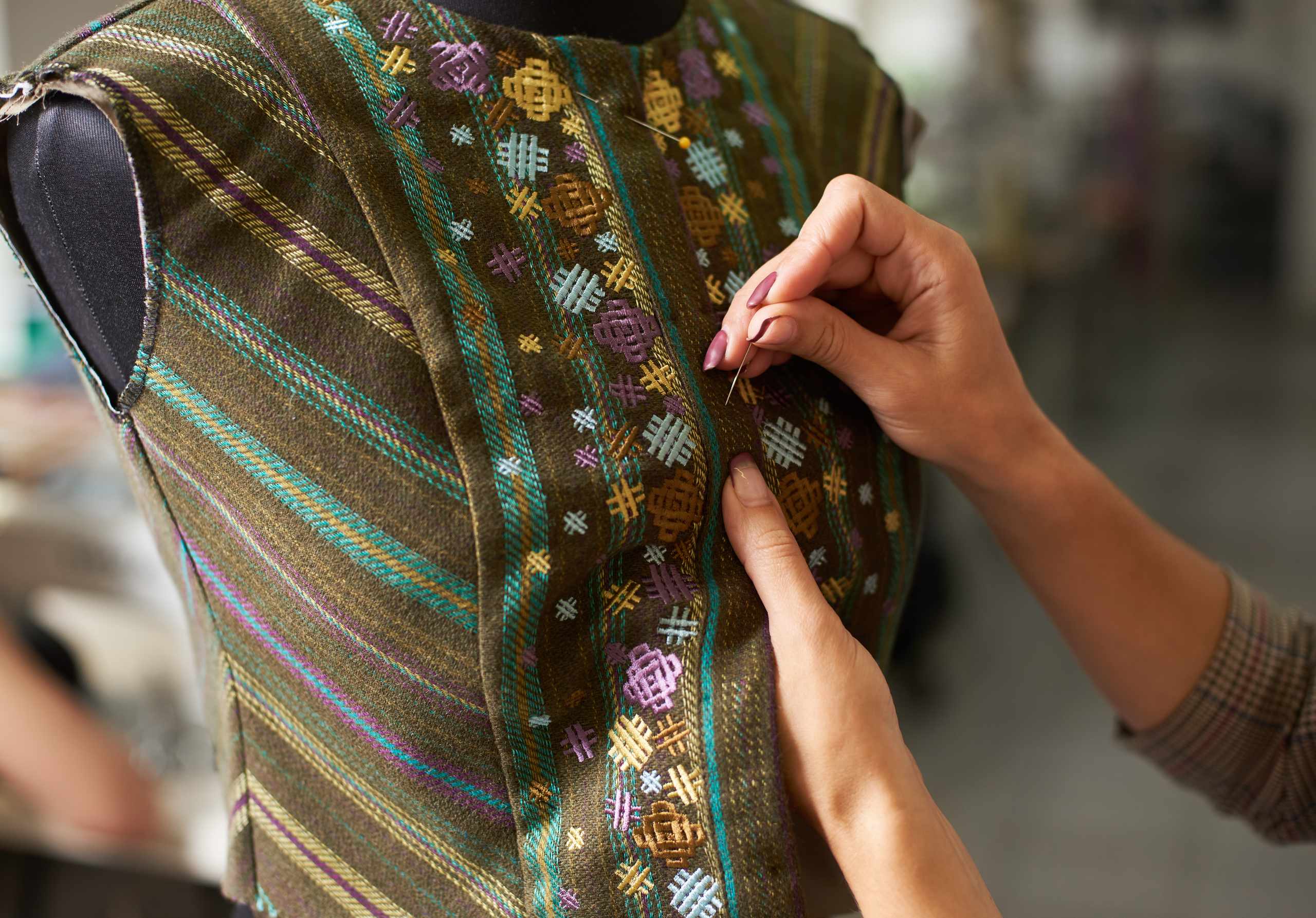
It’s often best to decorate your costume after you’ve sewn your costume. If you want to use trim or ribbon to add interest to your costume it’s often helpful to try your ribbon or trim on your costume after your costume fits just the way you planned. Once you’re ready, you can applique on some ribbon, topstitch, or add any applique. Decorating a garment can change the way a garment hangs if not properly secured to the garment structure and it is helpful to have your costume sewn up and fitting to your body before decorating.